

“A seven-letter vord for nocturnal fiend?” Prince Demetrius Draconis, the Invincible Terror of Aragaard asked, stretching his lips past his twin points to pronounce the monstrous clue.
His mate’s treacly voice emanated from the dreary kitchenette, saying, “Bite me.” A ding from the microwave followed, heralding their evening repast.
“Dat’s only seex.”
Dee Dee’s crossword (dreadful name for a puzzle) did little to relieve the tension. His mistress was in a funk of midnight blue. Most of the time she was the stone on which his life was etched, his wingman through the long night, but every few decades a shadow devoured her loving disposition. He reckoned this turn in the cycle stemmed from the recent decline in their circumstances. A prince’s consort should not be made to cower in squalor.
She glided over the floor and placed the feast before him. He looked down. “Meatloaf from Costco?”
“Specialty of de houze. Eef you don’ like eet, you can starve like a mange-ridden cur.” Esmerelda the Fair was in no mood for insolence. He’d watched for hours as she vacuumed their cellar hovel, touched up the black paint covering the windows, and cleaned the tiny bones from around the catafalque supporting the matching his and hers mahogany-lidded beds. Circles under her eyes spoiled her otherwise perfect alabaster skin. Her lithe figure, presented to full effect via a tight bodice, nonetheless wilted as she stalked the premises. He knew she was tired of living in a hole where the rats were dry and scrawny, and the pipes wheezed and wailed like the claxons of hell every time someone upstairs flushed.
She plopped his favorite McDonald’s glass onto the table so hard it threatened to shatter the half-century old keepsake. “I never drink… varm Pepsi,” he said, offering a crooked little boy grin that allowed one point to peek out. Silently as a grave, she reached over and skated her black enameled nail round the rim, endowing Grimace’s head with a wintry crown of crystalline flowers.
“Zhank you.” Dee Dee poked at the meatloaf with his fork. “Dis looks delicious. Eet’s only… eet’s just… so… dead. Do vee haff any catsup?” He stopped. Then in an instant, his pupils flashed red with glee. “I know, vhy don’t vee eat out tonight? Spoil ourselves. That new place in Duluth is drawing crowds. You know how you love Chinese.”
“Eef you vant to hunt, hunt someting vit a fat vallet. Tings cost money, my prince. America ees fresh out of peasants. No vun’s villing to till our fields and fight our battles for us anymore.”
“I try, Esme, my love tarantula, but eet’s not like eet used to be.”
“Oh, here eet comes, de vhining and de excuzes.”
“I’m not vhining! Eet’s hard. De day people do everyting on dose leetle plastic cards now. Dey Zelle here and PayPal dere. Vhatever happened to cash money?”
“Technology happened. De vorld changed. People do business online; you still use a clamshell phone vit no Vi-Fi!”
“But eet’s so cool! Besides, I brought you all dat jewelry.”
She stepped over to a chest and flung it open, exposing mounds of necklaces, rings, and trinkets. “Most are fakes and cheap costume pieces. Dey laughed me out of de ‘Ve Buy Gold’ store.” She paused, took a rare breath, and softened her expression. “Stay avay from de cheap willages,” she said, encircling him in her arms.
“I don’t dare vork in Buckhead. Dey have—” He shuddered. “cameras.”
Fingering his widow’s peak in the way he loved, she gently said, “So, vhat? On camera you look like your gret gret gret … and so on … grandfahter.”
“Eet vill steal my soul.” A playful thrust.
“You don’t have vun, my prince,” she parried. It was the barest glimmer of good spirits she’d shown him in a while.
This was but a passing phase, he told himself. They had been so long together, told each other the same old stories so many times, shared so much, it was unclear to him now where she left off and he began. It mattered not. Even now, her nearness sent his heart racing to twenty beats per minute!
Thusly emboldened by ardor, Dee Dee flew off into the night.
The following weeks were a blur of activity. Let no man, living or otherwise, call Prince Demetrius Draconis, the Invincible Terror of Aragaard a layabout. In his best double-breasted pinstripe, he hit the bricks, chasing down every lead. The choices were few on the graveyard shift, especially as the bully sun was gaining its summer strength, eating the night at both ends and leaving precious little time for him to earn a wage.
Dee Dee accepted a position as an overnight guard at a gated community, using his psychic influence to convince the human resources chief he was bonded. This assignment lasted for three weeks, until the night one of the residents, a Karen in an Escalade, caught him drinking on the job. It was only a stray, but his boss wouldn’t listen to reason. He quickly stripped Dee Dee of his radio, flashlight, and badge— a shame, after he’d gone to all the trouble of touching up the photo.
The less said about job number two, the better. While holding a Bible caused him no particular discomfort, selling the books door to door was not his calling. A salesman must have faith in his product. It was a long, long week of rejection.
Still, he didn’t allow these setbacks to dampen his determination. After all, he’d survived the loss of his land and titles, his wealth, his castle, even his former country. By comparison, a rough job market was nothing.
Frustrated, but unbowed, Dee Dee struck upon his dream job a few nights later. It was less a vocation than a service industry position. He distributed strong powders and potions on the street for a man named Kasim. Dee Dee immediately knew he’d found his calling. Cash only, home by dawn, and no one seemed to notice if the occasional customer came up several pints low. He even enjoyed the second-hand buzz.
A few nights later, the once feared scourge of the Mediterranean handed his existential partner a diamond solitaire and matching earrings, purchased with his newfound income. There! There in her eyes, he would at last see the light of his precious Esme as he had not seen in centuries. Surely, this would please her.
“Ch’eh!” It came as a guttural, back-of-the-throat, points bared dismissal of his devotional offering.
For three solid nights his Esme remained immobile and mute. He would return with pockets stuffed with cash, only to find her unmoved from when he’d left, staring in fascination into space, a hint of sadness on her perfect features.
“Man, you look like hell, especially for someone making all this cake,” Kasim said one pre-dawn as they stood around a table in Kasim’s seedy motel room, dividing the night’s earnings among Dee Dee and three female associates. Kasim held back a large percentage of the profits for a pension plan, which irritated Dee Dee, but he figured he could get it all back if Kasim made him weary, or if he grew weary of meatloaf.
“Sorry. Troubles at home.”
“With all these dead presidents? Your old lady’s unhappy? That’s tragic, my man. Not that it’s any of my business, but maybe if you gave her a little more.”
“More vhat?”
“You know!” Kasim said, placing his hand in front of him about two feet apart and lewdly rocking his hips back and forth.
“Ah, dat. Vee do dat like maddened ferrets.”
Kasim looked confused, then ventured, “Good on you, my prince.”
“Dat eez not de problem. Usually.”
“Mmm hmm,” intoned the third associate, Mona Mai, not looking up from her phone’s screen. She was reading Hobbes’ Leviathan for her Poli Sci course, paid for through Kasim’s advanced education fund.
”No. Dat eez not eet,” Dee Dee insisted.
“Then, there’s only one other thing. She needs some tenderness. Isn’t that right, Jayne?” he asked of the tall blue-eyed blonde, who wore a great deal of eye liner, stiletto heels, and, despite the summer heat, a fun fur jacket.
“A lady needs to be appreciated,” Jayne agreed, flicking away a tumbleweed of rabbit hair.
“Take her on vacation,” Eboni, the sentimentalist of the group, suggested. “A little fun in the sun in Miami.”
Mona Mai, in her big butterfly glasses by Valentino, kept reading, occasionally mouthing passages as if to will them into memory. She had a test coming up.
“Yes,” agreed Dee Dee. “Maybe not Miami, but some romantic getaway, just de two of us. Maybe New Orleans.”
“That’s my guy!” said Kasim. “Remind her why she fell for you in the first place.”
Dee Dee thanked them and hurried home. The sun tinged the horizon pink as he entered their apartment. Esme was already flat on her back, arms folded over her bosom, ready for sleep.
“My intoxicating Oleander,” Dee Dee began, climbing into his own bed. “I vant to take you to… Paris!” It just came out. In fact, Dee Dee hated Paris. The catacombs tour was overpriced, and the waiters were rude and put garlic in everything. Still, Paris was a favorite city of hers. And, at night, it was almost—
Esme cut short his reminiscing. “You go!” Before he could say anything more, she slammed the lid on the conversation.
Dee Dee stood up at the foot of his satin-lined bed. Without seeing it, he could sense the detestable sun making its inevitable appearance outside. In desperation, he called out, “I’ll do anything! Name eet, my sveet meat!”
Through the lid came a becalmed voice audible only to uncanny senses. “You know vhat I vant.”
As he lowered himself at the heels, a man-sized hinge, it struck him. Not again! She wanted that.
The following twilight, he made sure to be awake before she rose.
“Ve’ve gone over dees so many times, Esme. I’m happy de vay vee are. Eet’s fun to be living in sin, hehe. Dere’s no need for dat teeng.”
“Eet’s not a teeng. Eet’s a vedding. A church vedding. Two Brits got ved on teewee yesterday. De Duke of Eastvestupdownshire and de Lady Snootbottom. It vas a fairy tale affair. Brits! Aragaard should have crushed dose people and deir soggy island centuries ago.”
“Our vedding vas also a fairy tale. Ve vere bound togedder under de stars. A dark kiss made us inseparable as Moon and Primrose. Ve—”
“Dat vas not a proper vedding.”
“Our parents came.”
“My fahter came to kill us. He brought an army. Your mother brought de plague.”
“Enough!” he said with a sigh of resignation. It is a wise man who knows when he is beaten. The pyramids would tumble to pebbles before she gave up this idea. “My Esmerelda vants a church vedding, she gets a church vedding!” He couldn’t believe he was saying the words after so many centuries, and yet… somehow, it felt right.
She was his chosen, his sky partner, his all. Prior to the unfortunate decline of monarchies and the cursed rise of witless democracy, had it not been she who had ruled beside him, defeating and devouring all who dared oppose? Had war not driven them from the old country, they might still be leading that life. True, America had been a disappointment, but they had come together. Together they would remain.
So… a church wedding.
The guest list was tragically simple. There wasn’t one. Their mortal families were gone to dust and wisps of memory long ago. Friends had likewise fallen by the wayside over time. Adieu: Raphael and Senna, lost to the torches of a soapless mob villagers; D’Arcy, who attained the age of one thousand years only to wander off one night and vanish in the fog; Sorina, banished from their lives for talking them into a time share deal; Einar, taken by the lightning in an October gale; Magda, who forgot about Daylight Saving Time; Llewellin, Tina, Umfredo, Aseneth, and Neculai. Adieu, dear friends, adieu.
If anything, such losses proved the value of holding true to the one who gave meaning to his long life. Esmerelda was his forever gal. It was she, after all, who pulled him from his multi-colored rooms just as the wretched scarlet spots felled his costumed party guests and then dared lay its boney hand on his royal hem. Esmerelda the Fair cheated the masked intruder by bestowing on Dee Dee her special kiss to take his mortal breath away and remake him into the form he was now.
Memories were to be enjoyed like vintage wine, some years better than others. Dee Dee and Esme had giggled like teenagers through the late show of Macbeth at the Globe, soared together in the French skies during the appalling (albeit appetizing) reign of Madame Guillotine, ordered steaks extra rare at Delmonico’s on Beaver Street, and watched dumbstruck from the Spanish sidelines as clanking, greasy, gassy, insensate technology turned Europe into an abattoir. Yes, a long memory was a mixed blessing.
Dee Dee turned to the next order of business, finding a venue to please Esme. “Eet should be memorable, classical, yet inwiting,” she said.
“Nutting ees too good for de qveen of my nights.”
The next evening, Dee Dee dropped in at St. Philip’s Cathedral, at the split of Peachtree and Andrews, what the locals called ‘Jesus Junction.’ The structure’s yellowish limestone walls tossed up a high carillon tower from its six-sided base, all presented in satisfyingly Gothic charm. De vindows are perhaps maudlin, but dis vill do, Dee Dee thought to himself as he made his way to the front doors.
There, however, he hesitated. It had been a while. In the old country, such places were filled with a Presence that might consider him to be trespassing. He opened one door and tentatively stuck one toe inside the narthex. His foot did not burst into flames, nor did his head spin round and round on its axis. Nothing. “Not a teeckle.”
Dee Dee continued inside to the lightly occupied nave. He fought down the urge to take jittery flight within such vaulted luster for fear of being downed by a ballistic hymnal. A life-size crucifix hung by the pulpit, gazing down at the pews with an expression shaded between sorrow and boredom. Like the others he’d seen over the centuries, this Nazarene resembled not at all His contemporaries. Instead, the features represented the ideals of the congregation: tall, not short and stocky, hair of autumn gold rather than glossy black, eyes of sky not earth, and complexion– well, had Jesus actually looked like that, surely a Gospel or two would have mentioned it.
Vhat are you looking at? he wondered at the silent figure.
“May I help you, my… son?” It was a young priest, eyeing him up and down. Understandable, since few people these days possessed the panache to dress in formal evening wear, including white tie and cape.
“Indeed, Fahter. I am here for a vedding. My party vill be arriving shortly.”
The priest looked taken aback. “You mean tonight? I’m afraid that’s not—”
Dee Dee stopped the man’s protests by holding up a weighty cross of gold on a chain. “Eet’s qvite real. You can use eet as a spare. Yours, een exchange for a simple serwice. Our party numbers… uh… seex.”
On cue, Kasim entered, dressed in a gleaming white samite suit with pink bow tie and an eighteen-hundred-dollar pair of Louis Orlatos. Jayne, Eboni, and Mona Mai, followed in matching chiffon gowns the color of onyx. “We’re here for the nuptials. Right up there at that big old alter,” Eboni said, pointing a manicured and bedazzled nail. Jayne dabbed her moist eyes.
“Yes, I understand your desire, but there are rules,” the priest sputtered.
“My prince is all about the rules,” Kasim offered, his familiarity prompting a scowl from Esme. “Tell em, Double-D.”
“Name your rules,” Dee Dee said, smiling, but being careful to keep his points covered.
The young priest fidgeted for a moment then said, “First, we do weddings on Saturdays.”
“You’ll make an exception. We’re good people,” Eboni said.
“Are you members of the St. Philip’s family? You must be a member for at least a year.”
“I got pretty close with one of your uncles a year ago, in the back parking lot,” Jayne offered slyly. “Just say we’re family.”
The priest looked over to an older man still dressed in his cassock from vespers. This man quickly departed through a side door. The younger priest hummed and hawed for a time, trying to make small talk. Finally, he asked, “Well, I guess the main question is… are you of the Episcopal faith?”
“Vee vere raised Roman Catholic! Bote of us!” boomed a female voice from just outside the sanctuary, hidden from sight.
“Who is that?” the priest asked.
“The bride,” Kasim answered, beating Dee Dee to the punch.
“My little mamba!” Dee Dee called out to her.
He started towards his betrothed, but she froze him in his tracks with a stern, “No peeking, you!”
Mona Mai scolded Dee Dee. “You can’t see the bride before the ceremony. It’s seven years’ bad luck.”
“Pfffft. Seven years,” Dee Dee said, but rejoined the others.
“Well, we have a conversion program for Catholics.”
“Ve’ve lapsed,” Dee Dee said and instantly regretted it.
A deathly wail rang out. Esme stormed the cathedral, both fists down, one clutching a bouquet of Queen of Night tulips, chosen to match her flowing raven lace applique gown. Looking not unlike a twister scourging its way across a wheat field, she fixed Dee Dee with a deathly serious gaze and cried, “Eediot!”
“My funny faced Komodo dragon!” he tried, meekly.
Esme passed him and walked straight to the priest, poking a sharp nail into his chest like a stake. “I haff vaited centuries for dis night! How dare you speak of rules and membersheeps. I vill curse you to de—”
“What seems to be the problem here?” It was an Atlanta police sergeant, flanked by three of his fellow officers. They’d forgone the sirens, but blue carnival lights swept in behind them.
In short order, the police escorted the wedding party off the premises.
“What kinda White bullshit is this? Black people can’t even walk into no White church now?” Jayne tried to keep Eboni’s mouth from earning them a trip to lock-up. She apologized to the dead-faced cops and ushered everyone into their waiting stretch limo.
As they drove through the Buckhead streets, Mona Mai summed up their situation: “Life is nasty, brutish and short.” Dee Dee didn’t feel like correcting her on the last part.
Twenty minutes later, the six of them crowded around a table in the OK Café on West Pace Ferry, picking at a platter of Sweet Potato Chips. Eboni and Jayne chattered to each other like cheerleaders in the locker room and tapped away at their phones.
“I love your dress, sugar,” said the waitress, topping off their drinks. Esme ignored the compliment and the woman left.
“Dis ees de vorst night of my life!” she said from between gritted teeth.
“Vorse dan de summer of 1334?” Dee Dee tried. A standard joke between them, the quip drew nary a smile. Rather, Esme’s eyes glowed red, threatening to burn him to ashes.
“Don’t worry, Mrs. D. It’ll all turn out okay, you’ll see.” Kasim spoke with his mouth full of chips, his enthusiasm failing to touch Esme.
“Turn out okay. Just like dat? How? I haff no church, no priest, nothing but my loser prince and his loser friends!” she spat.
Jayne and Eboni looked up from their phones, one with a snarl on her lip, the other stone cold. “Bitch don’t wanna get married tonight, bitch don’t have to,” Eboni said.
The hurt little girl who lived inside Esme asked, “Vhat are you talking about?”
Eboni turned her screen around so Esme could read it. “This, Elvira!”
“Huzzah!”
By the time the six of them got to the Tabernacle on Luckie Street, it was past eleven. For most people it was late, but not for the crowd inside enjoying the band. The Tabernacle had indeed existed as a church, some said a brothel, and was now a place for chasing the nightlife.
“Eet’s a jewel!” Esme gasped as she ran her fingers over the brickwork, which conducted the homey twang of Jason Aldeen’s Burnin’ It Down along with the delicious body heat of his loyal fans. Esme hastened to apologize to her bride’s maids, and to thank them for bringing them here.
“Vee still need a priest,” Dee Dee said.
“Preacher,” Jayne corrected. “My ex-roommate is inside. She says she’s wearing orangey tie-dye and cut-offs.”
Without further discussion, they made their way inside. The lights were confusing, the crowd obstructive, and the noise deafening to mortal ears. Using their preternatural skills, Dee Dee and Esme had no trouble finding Jayne’s friend.
The group found a modicum of privacy in an upper room overlooking and just back from the main floor. Dee Dee could smell a mix of sweet weed and heady patchouli oil on the preacher, whose name was Storm Daisy, and who covertly eyed the other women, especially Esme, with a certain appreciation. The Rev. Storm Daisy showed them her certification on an app for the Church of Cosmic Enlightenment. Between giggles, she began, “Dearly beloved, we are ready to do it tonight!”
Kasim dutifully pulled a small velvety box from his coat and opened it. From inside, Dee Dee lifted the carefully chosen token with its stone of rich ochre and placed it on his eternal companion’s slender ring finger.
At precisely the stroke of midnight, as Jason Aldeen sang Night Train, Prince Demetrius Draconis, the Invincible Terror of Aragaard and Esmerelda the Fair exchanged their vows:
“You eclipse de sun.”
“You are my crimson moon.”
“You are my reason to rise.”
“You are de only heaven I vill ever know and de only vun I vill ever need.”
Together, they recited the agreed upon final line: “Let us be as vun, for all of our nights, forever.”
Kasim stood speechless. Mona Mai cried out, “Kiss that bride NOW!”
“Kiss! Kiss! KISS!” they all chanted, pounding on a table or a wall or stomping on the buckled floorboards.
The obliviously happy couple obeyed for the next hour and then some.
The Draconises honeymooned away from it all, at the cozily desolate Amundsen-Scott Station (population fifty, give or take a few), leaving the pitiless sun to pound away at Atlanta. In their dark nether domain, the newlywed couple enjoyed true happiness. Until…
One night, or it might have been midday for all anyone could tell, the lovers lay rediscovering each other’s cool arms, nestled inside their new king-size lidded bed (a wedding gift from Kasim and his associates), talking about love and the future.
“Now dat ve’re legally married, my prince…”
“Yes, honey badger?”
“I vant…”
Prince Demetrius, the once feared heir to the throne of Aragaard, held his breath. His heart hung still and unbeating in his chest.This again.
Esme’s delicate voice confirmed his suspicions. “I vant a family.”
“But, Esme, breath to my clay…”
“No butts! Give me a bebby!”
####
If you enjoyed this story, please SHARE! Thanks and check back often for new content.
Still thirsting for stories of strange creatures, ghosts, and witches? Check out:
https://www.amazon.com/Skinners-Love-Story-Riker/dp/B0C534L136/ 
https://www.amazon.com/Zebulon-Angell-Shadow-Chris-Riker/dp/1637107056 
https://www.amazon.com/Goody-Celeste-Chris-Riker/dp/1665307072 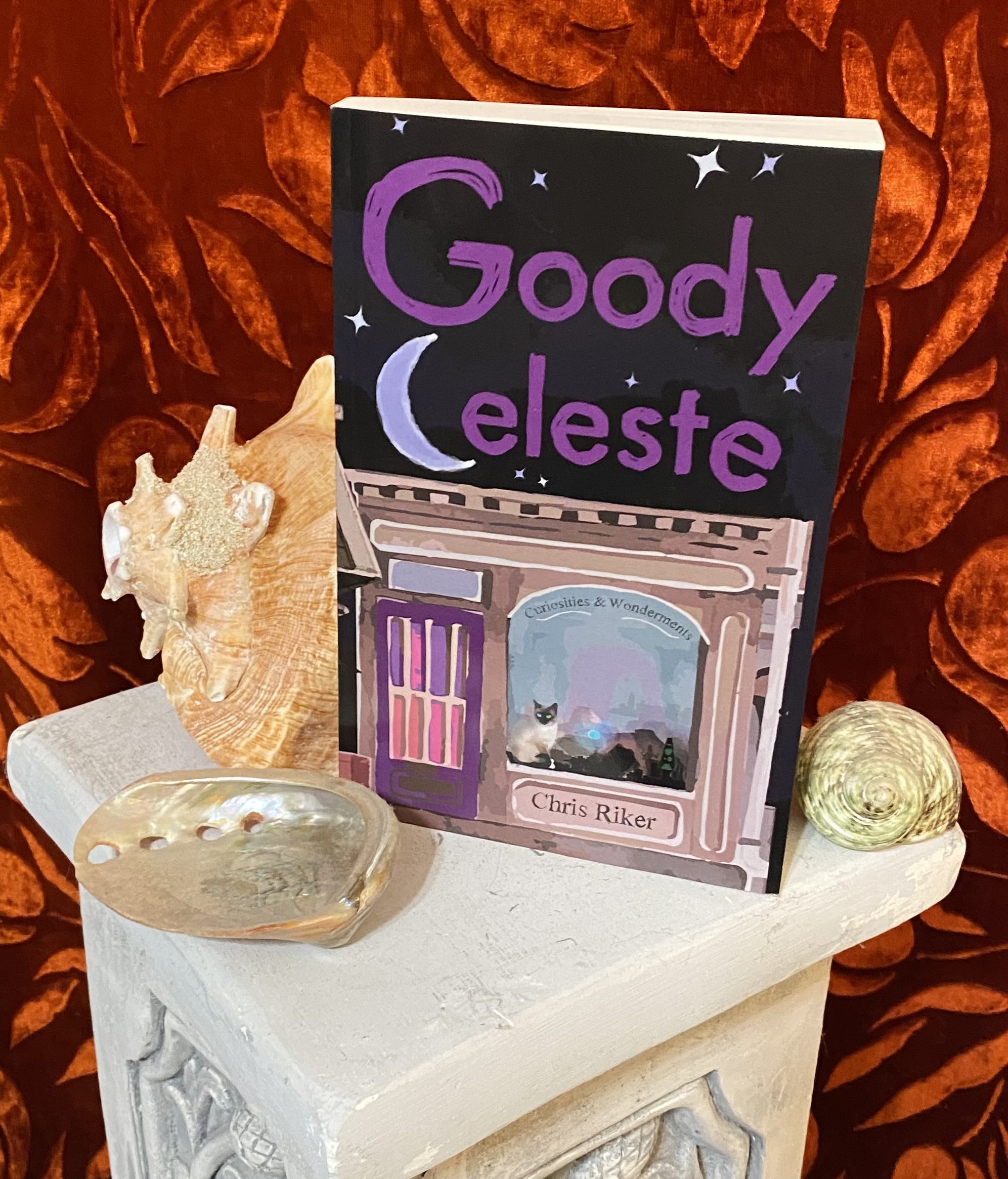
https://www.amazon.com/Darkling-American-Hymn-Chris-Riker/dp/B0FLCN37NV 
- Details
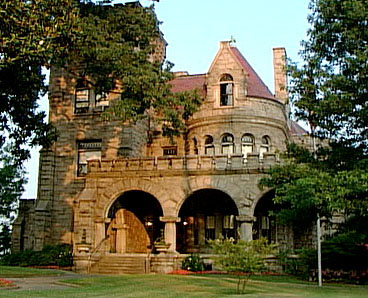
Atlanta has a number of locations that are sadly missing from movies and TV. I remember watching Matlock and Designing Women in the 80s (both set in Atlanta) and thinking... these don't look anything like Atlanta. Hell, Matlock used to get the name of the newspaper and the baseball team wrong! One site that deserves attention is Rhodes Hall on Peachtree Street. It's right near Peachtree Christian Church, both glorious gothic monsters and perfect for the kind of spooky happenings in Skinners - A Love Story. So, I used them both!
Don't try to tell me there are no vampires in there...
https://saportareport.com/rhodes-hall-tours-return-in-2024/sections/reports/delaneytarr/
Want to read more, check out Skinners - A Love Story:
https://www.draft2digital.com/book/1071497
- Details
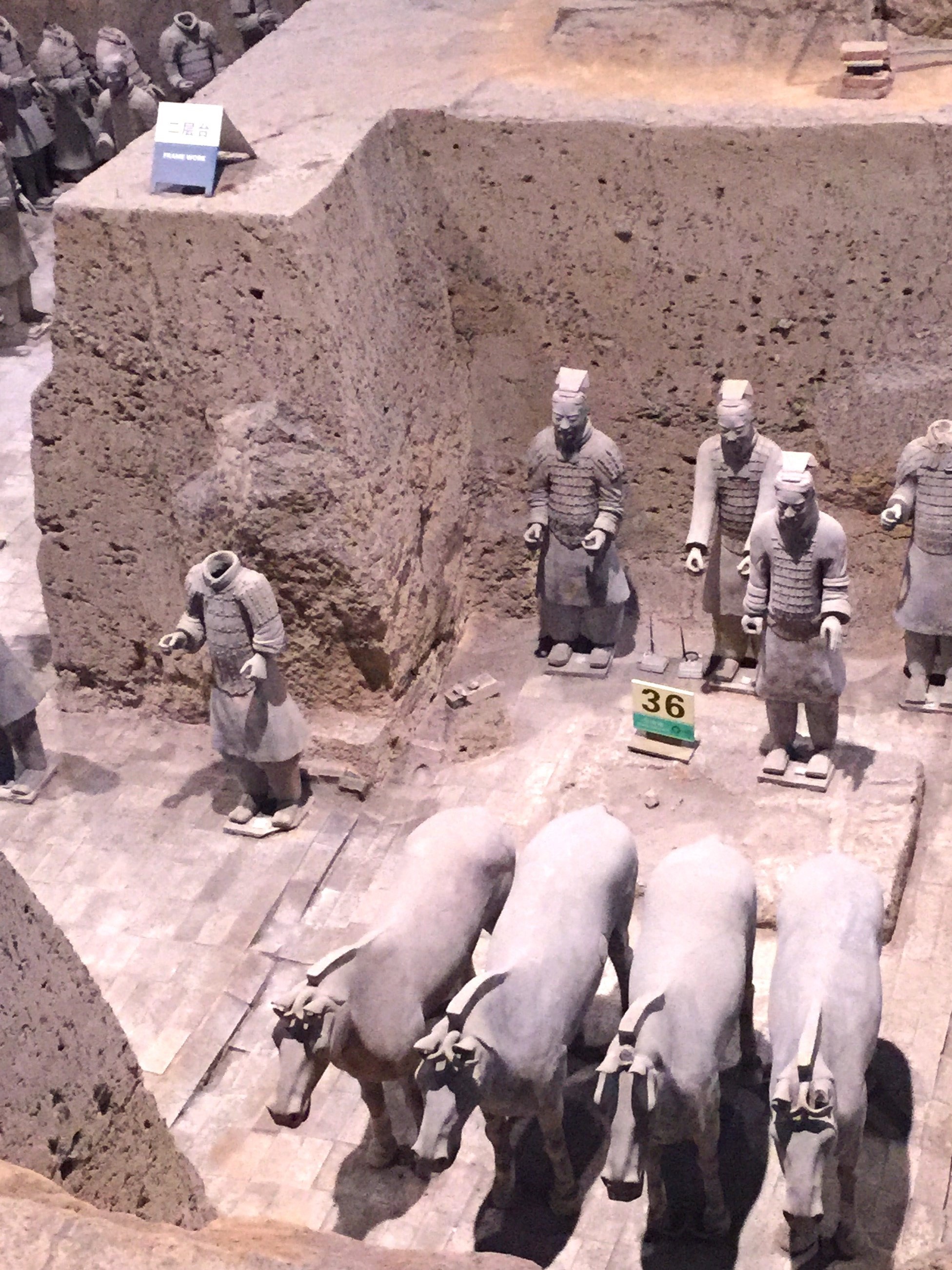
Travel will expand your mind. Things you learn when you visit the Terracotta Soldiers: No two are identical... although the artisans were known to repeat a nose or ear here and there... These fighters once held real weapons, which were stolen... Oh, and the ones with pot bellies? Those are the generals. You can see why I had to write Zebulon Angell and the Shadow Army. I hope you enjoy the article and SHARE it with your friends.
https://www.smithsonianmag.com/history/terra-cotta-soldiers-on-the-march-30942673/

- Details

Octopodes are simply fascinating. The more you study, the more they amaze you. That's one of the reasons Septielle and the other octopodes play such a vital role in Come the Eventide. I hope you'll check it out... after you read this cool article:
- Details
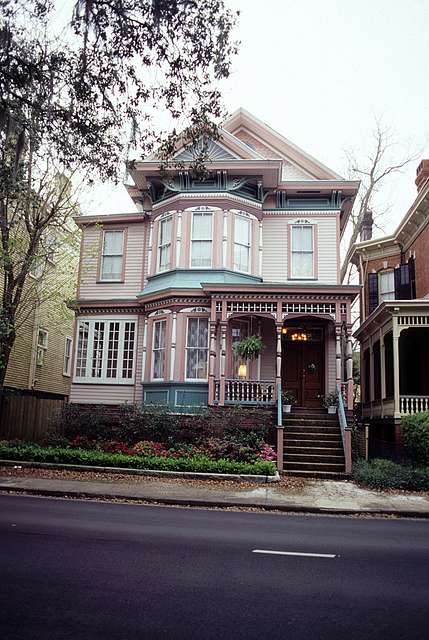
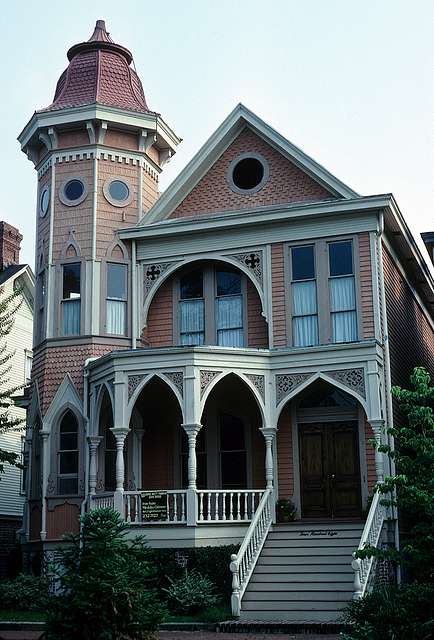 When I was writing Skinners - A Love Story, it wasn't hard to find a city in which to chase ghosts. If you've never taken the "Ghost Tour," it's great fun... and a little scary. Spanish moss, wrought iron gates, creepy old mansions, decaying graveyards... I took the tour and then did my homework for Skinners... with the lights on. Enjoy!
https://genteelandbard.com/savannah-ghost-stories
Check out Skinners - A Love Story and see Savannah take on her starring role! https://www.amazon.com/Skinners-Love-Story-Riker/dp/B0C534L136/

- Details

This is the kind of science that inspired me to write Come the Eventide.
The question is whether we as humans can and should learn from our fellow sentient species. As this article points out, our co-inhabitants of Earth have plenty to teach us. What we learn could save a lot of lives.It's a fascinating read.

- Details